Description
What is IGF-1 LR3 known for?
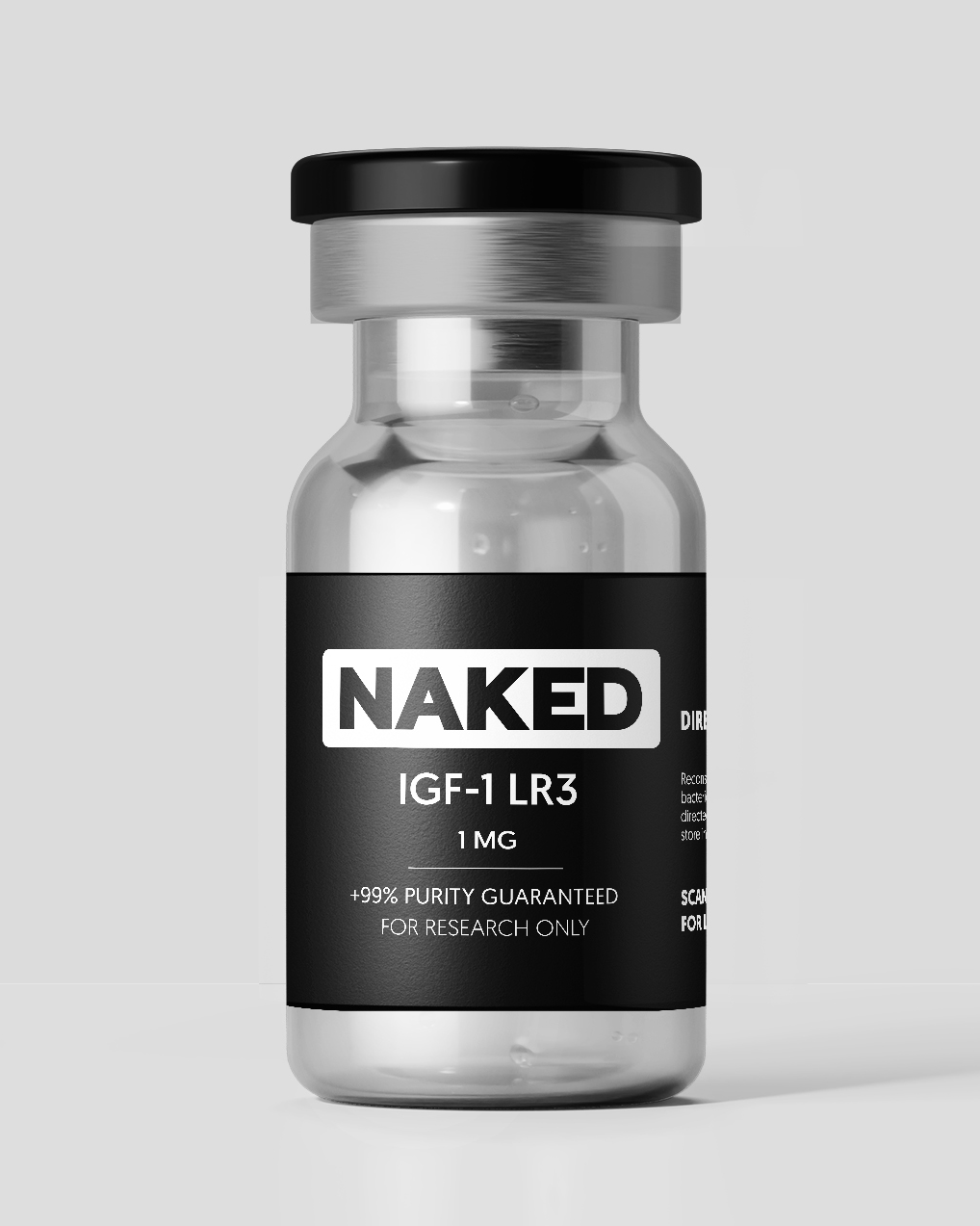
IGF-1 LR3 (Insulin-Like Growth Factor-1 Long R3) is a long-acting peptide analogue studied for its role in muscle growth, cellular repair, recovery, nutrient partitioning, and performance enhancement.
As a modified version of IGF-1 with an extended half-life, IGF-1 LR3 is researched for its ability to support anabolic signaling, muscle hypertrophy, and tissue regeneration through activation of IGF-1 pathways involved in growth and recovery.
Muscle growth & anabolic support
IGF-1 LR3 is commonly studied for its ability to:
- Support lean muscle growth
- Enhance muscle cell proliferation
- Improve recovery from intense training
- Promote anabolic activity and protein synthesis
Proposed mechanisms include:
- Activation of IGF-1 receptors involved in muscle growth
- Increased nutrient uptake into muscle cells
- Enhanced amino acid utilization
- Support for muscle tissue regeneration and repair
Because of its extended activity compared to standard IGF-1, LR3 is commonly researched for sustained anabolic support.
Recovery & tissue repair
Research involving IGF-1 LR3 has explored its role in:
- Supporting muscle recovery after training
- Promoting cellular repair processes
- Enhancing tissue regeneration
- Reducing recovery time between workouts
Its regenerative signaling pathways are commonly associated with recovery optimization and tissue resilience under physical stress.
Performance & nutrient partitioning
IGF-1 LR3 is also studied for its effects on nutrient utilization and physical performance by supporting:
- Improved nutrient delivery to muscle tissue
- Enhanced glycogen replenishment
- Better recovery capacity during intense training cycles
- Support for strength and performance adaptation
Many researchers explore IGF-1 LR3 for its potential role in optimizing body composition and improving anabolic efficiency.
Cellular growth & regeneration
As a growth-factor related peptide, IGF-1 LR3 is studied for supporting:
- Cellular growth signaling
- Healthy tissue development
- Regenerative activity within muscle tissue
- Recovery from physical strain and stress
Its extended half-life allows for prolonged receptor interaction compared to naturally occurring IGF-1.
Mechanism of action
- Binds to IGF-1 receptors involved in anabolic and regenerative signaling
- Supports protein synthesis and muscle cell growth
- Enhances nutrient uptake into muscle tissue
- Promotes tissue repair and recovery pathways
- Provides extended activity through modified long-acting structure
Unlike stimulant-based performance compounds, IGF-1 LR3 works through growth-factor signaling pathways associated with muscle growth and cellular regeneration.
Summary
IGF-1 LR3 is a long-acting IGF-1 analogue studied for muscle growth, recovery, tissue repair, nutrient partitioning, and anabolic support.
In short:
- Supports lean muscle growth
- Enhances recovery and tissue repair
- Promotes anabolic signaling
- Improves nutrient utilization
- Supports performance and body composition goals
- Encourages regenerative cellular activity
Disclaimer: This content is for educational and research purposes only and is not intended as medical advice. Always conduct your own research and consult a qualified professional before use.